

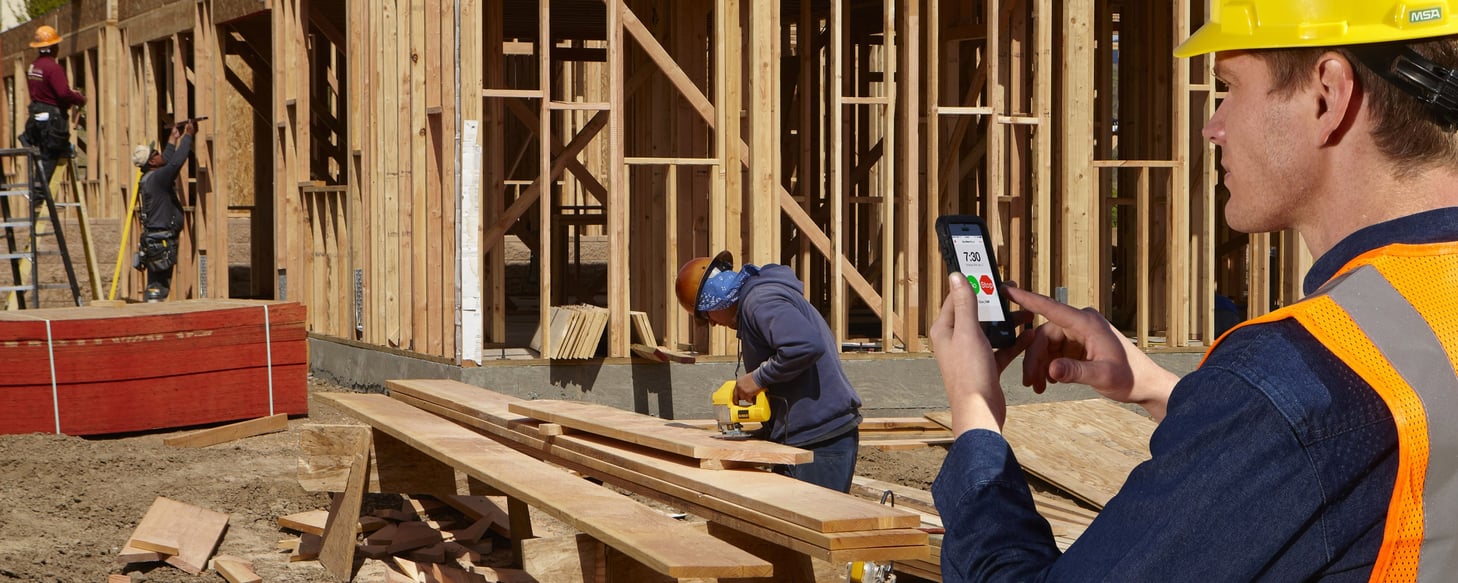
Remember the days of punch clocks and stacks of paper time cards? For many construction companies and field service businesses, those days aren’t memories, they’re still the daily reality. But clinging to manual time tracking methods comes with hidden costs that add up fast: payroll errors, compliance headaches, and hours spent deciphering illegible handwriting.
The good news? Modern time clock apps have transformed how businesses track employee hours, turning what used to be an administrative nightmare into a streamlined, accurate process. One company eliminated 13–14-hour days by implementing a digital solution for time tracking and payroll.
Here are even more reasons to leave those paper time cards behind.
The Real Cost of Manual Time Tracking
Manual time tracking might seem simple on the surface, employees punch a time clock, fill out paper time cards, and managers process them for payroll. But this system creates problems that ripple through your entire organization.
Handwriting That No One Can Read
When employees manually fill out time cards, illegible handwriting becomes a constant source of frustration. What looks like 7:15 could easily be 1:15. Managers waste valuable time playing detective, often needing to track down workers to clarify their hours. These delays don’t just slow down payroll processing, they could possibly create tension between office staff and field employees who feel their time isn’t being recorded accurately.
Payroll Errors That Cost Real Money
Manual time card systems are breeding grounds for costly mistakes. A misread number here, a forgotten entry there, and suddenly you’re overpaying some employees while shortchanging others. According to HR Morning, 64% of employees said they’ve experienced financial stress due to paycheck errors or delays – and more than half (53%) said they’d consider leaving if payroll problems continued.
Workers who consistently receive incorrect paychecks start questioning whether their employer values their time and contributions. Meanwhile, your payroll team spends hours each pay period correcting mistakes that shouldn’t have happened in the first place.
The Physical Burden of Paper Time Cards
Think about the logistics of paper-based time tracking. Time cards need to be printed, distributed, collected, stored, and eventually archived. For companies with multiple job sites or field crews, this means coordinators physically transporting time cards back and forth. Cards get lost, damaged by weather, or left at job sites.
And then there’s the storage issue. Federal labor laws, like the Fair Labor Standards Act, require businesses to keep time records to prove employees are being correctly paid for all hours worked. That’s a lot of filing cabinets taking up valuable office space—space that could be used for something more productive than housing old time cards.
Buddy Punching and Time Theft
Manual punch clock systems create opportunities for time theft that can significantly impact your labor costs. "Buddy punching,” when one employee clocks in for another who’s running late or absent, is surprisingly common with traditional time clocks. One report claimed buddy punching costs US employers $373 million every year. Without biometric verification or GPS tracking, there’s no way to confirm the person punching the time clock is actually the employee listed on the time card.
Even when employees aren’t deliberately dishonest, manual systems make it easy to round up hours or add a few extra minutes here and there. Over time, these small inflations add up to substantial losses.
How Digital Time Clock Apps Solve These Problems
A time tracking app eliminates the pain points of manual systems while adding capabilities that paper time cards could never offer. Here’s what changes when you make the switch.
Crystal-Clear Digital Records
With a timecard app, there’s no handwriting to decipher. Employees clock in and out with a tap on their smartphone, and the system automatically records the exact time. No more guessing, no more callbacks to clarify hours, and no more disputes about what was written on a time card.
Digital time tracking creates an indisputable record of when employees started and stopped work. This clarity protects both employers and employees, ensuring everyone’s on the same page about hours worked.
Automated Time Card Calculations
Modern time clock apps include a built-in time card calculator that automatically tallies daily and weekly hours. The best time tracking app solutions also handle complex calculations like overtime, double-time, and different pay rates for various job classifications, all without human error.
This automation dramatically reduces payroll processing time. What used to take hours of manual calculation can now be completed in minutes, with greater accuracy. Your payroll team can focus on more strategic tasks instead of being buried in timesheet calculations.
GPS and Geofencing for Accountability
Unlike a stationary punch clock that anyone can access, a clock in clock out app can verify employee locations using GPS technology. Geofencing features ensure employees can only clock in when they’re actually at the job site, virtually eliminating buddy punching and time theft.
For construction companies managing multiple projects simultaneously, this location verification is invaluable. You gain real-time visibility into which crews are at which sites, making it easier to allocate resources and respond to schedule changes.
Automatic Timesheet Reminders
One of the most frustrating aspects of manual time tracking is chasing down employees who forgot to submit their time cards. A quality time tracker app solves this with automated timesheet reminder notifications. Employees receive alerts when they forget to clock in or out, reducing missing punches and ensuring more complete records.
These reminders benefit everyone: employees don’t risk delayed or incorrect paychecks, and managers don’t waste time hunting down missing information.
Seamless Integration with Payroll Systems
The best time tracking apps integrate directly with your payroll software, eliminating manual data entry entirely. Hours flow automatically from the time clock app to your payroll system, where they’re ready for processing. This integration doesn’t just save time, it dramatically reduces the chance of transcription errors that plague manual systems.
For businesses using construction scheduling software, integration capabilities extend even further. Time tracking data can feed directly into job costing systems, helping you understand true labor costs for each project and make more informed bidding decisions.
Choosing the Right Time Clock Solution
Not all time tracking apps are created equal, especially for construction and field service industries with unique requirements. When evaluating options, consider these key features:
- Mobile accessibility: Your time card app needs to work wherever your employees are. Look for solutions with robust mobile apps that function even in areas with limited connectivity, then sync when back online.
- Flexibility for different work arrangements: The best clock in and out app solutions accommodate various employment types, hourly workers, contractors, remote employees, and field crews.
- Reporting and analytics: Beyond basic time tracking, quality solutions provide insights into labor costs, overtime trends, and productivity patterns that help you make better business decisions.
- User-friendly interface: If your time clock app is confusing or cumbersome, employees won’t use it properly. Look for intuitive designs that require minimal training.
- Compliance features: Ensure your chosen solution helps you meet labor law requirements for your industry and locations, including break tracking, overtime rules, and record retention.
Making the Transition from Manual to Digital
Switching from paper time cards to a digital time tracking app might seem daunting, but the transition is typically smoother than anticipated. Most modern solutions, like ExakTime by Arcoro, are designed for quick implementation with minimal disruption to your operations.
Start by introducing the new time clock app to a small pilot group, perhaps one crew or department. This approach allows you to work out any kinks and create internal change champions who can help train others. Document common questions and create simple reference guides that employees can access during the learning curve.
Communicate the benefits clearly to your team. Employees need to understand that the new system isn’t about micromanagement, it’s about ensuring they’re paid accurately and on time. When workers see how a clock in clock out app protects their interests by creating clear records of their hours, resistance typically melts away.
For managers worried about the cost of implementing construction scheduling software or time tracking solutions, consider the hidden costs you’re already paying with manual systems: payroll errors, administrative overhead, time theft, and compliance risks. Most companies find that a quality time tracker app pays for itself within the first few months through improved accuracy and efficiency alone.
The Bottom Line on Time Tracking Technology
Paper time cards and traditional punch clocks served their purpose for decades, but they’re simply not equipped to handle the complexities of modern workforce management. Digital time clock apps offer accuracy, accountability, and insights that manual methods can’t match.
Whether you’re managing construction crews across multiple job sites or coordinating field service technicians, a reliable time tracking app transforms how you handle one of your most critical HR functions. The technology eliminates the errors, inefficiencies, and frustrations of manual time tracking while giving you better data to manage your labor costs effectively.
ExakTime by Arcoro provides construction and field service companies with time tracking solutions specifically designed for the unique challenges of managing mobile workforces. With features like GPS verification, offline functionality, and seamless payroll integration, ExakTime helps businesses move beyond the limitations of paper time cards to more accurate, efficient workforce management.
Ready to see what digital time tracking can do for your business? Contact us to learn how easy and affordable it is to upgrade your time tracking process.
Frequently Asked Questions
Can employees use a time tracking app if they don't have smartphones?
Time clock options are available beyond personal smartphones. Employees can use a shared tablet or device at the job site, clock in through a web browser, or log the time offline and sync later when an internet connection is established. The best time tracking app solutions provide flexibility to accommodate your entire workforce, regardless of their access to personal devices.
What features do the best time tracking app for construction companies have?
Construction companies need time tracking software that works across multiple job sites, supports mobile crews, and integrates with payroll systems. The best construction time clock apps include GPS tracking, offline functionality, geofencing, and job costing features that help reduce payroll errors and improve labor visibility.
How do digital time clock apps reduce payroll errors?
Digital time clock apps automatically record employee hours and calculate overtime, breaks, and labor costs without manual data entry. This reduces mistakes caused by illegible handwriting, missed punches, and spreadsheet errors, helping companies process payroll faster and more accurately.
What is buddy punching, and how can employers prevent it?
Buddy punching happens when one employee clocks in or out for another employee who is absent or late. Modern time tracking apps help prevent buddy punching by using GPS verification, geofencing, and mobile authentication to confirm employees are physically present at the correct job site before clocking in.
Can a mobile time clock app work without internet access?
Many modern construction time tracking apps offer offline functionality, allowing employees to clock in and out even in remote areas with poor connectivity. Once the device reconnects to the internet, the system automatically syncs the saved time data back to the platform.
Why are paper time cards bad for construction and field service businesses?
Paper time cards create administrative delays, increase payroll mistakes, and make compliance tracking more difficult. They also make it harder to verify employee locations, prevent time theft, and accurately track labor costs across multiple projects or job sites. Digital time tracking systems provide better accuracy, accountability, and workforce visibility.